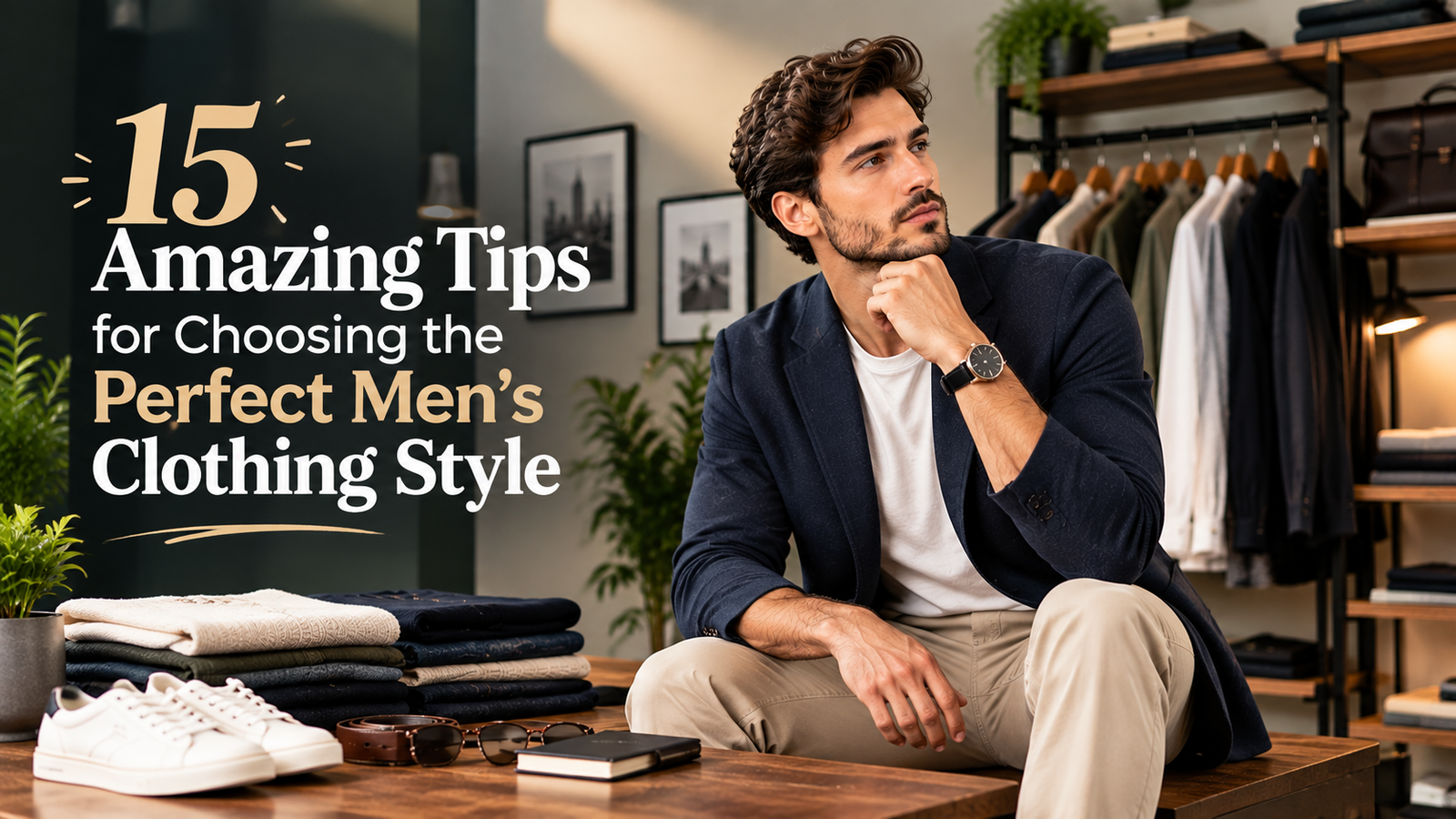
Finding the right mens clothing can make a significant difference in how you look, feel, and present yourself. A good wardrobe is not simply about having a large number of clothes. It is about choosing pieces that fit properly, feel comfortable, match your lifestyle, and can be styled for different occasions.
From everyday T-shirts and jeans to formal shirts, trousers, jackets, hoodies, and modern streetwear, there are many options available today. With so many styles and trends, choosing the right pieces can sometimes feel confusing.
The good news is that building a stylish men’s wardrobe does not have to be complicated. By understanding your personal style, checking clothing quality, choosing the right fit, and investing in versatile pieces, you can create a wardrobe that works for everyday life.
This guide covers 15 practical tips for choosing mens clothing, along with information about different styles, essential wardrobe pieces, seasonal dressing, online shopping, and common mistakes to avoid.
Table of Contents
What Is Mens Clothing?
Mens clothing includes the wide range of garments, accessories, and fashion pieces designed for men. It covers clothing for casual, formal, professional, social, athletic, and everyday situations.
Common categories include:
- T-shirts
- Shirts
- Jeans
- Trousers
- Chinos
- Jackets
- Hoodies
- Sweatshirts
- Shorts
- Suits
- Blazers
- Coats
- Activewear
- Accessories
The right selection depends on personal preferences, occupation, climate, lifestyle, and the occasions for which the clothing will be worn.
Modern fashion has also made men’s wardrobes more flexible. Casual and formal elements can often be combined to create different looks. For example, a clean shirt can be worn with jeans for a smart-casual outfit, while a blazer can be paired with chinos for a polished appearance.
Why Choosing the Right Mens Clothing Matters
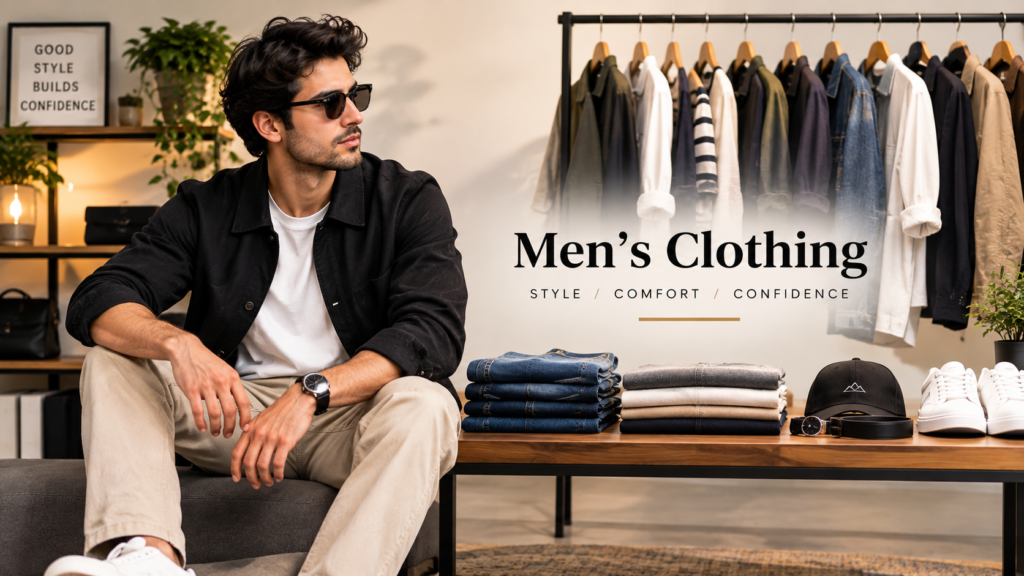
Clothing is an important part of personal presentation. Well-selected garments can help you feel comfortable and confident throughout the day.
The right wardrobe can also save time. When your clothes are easy to combine, choosing an outfit becomes much simpler.
Good clothing choices should consider several factors:
- Fit
- Comfort
- Quality
- Color
- Fabric
- Occasion
- Personal style
- Versatility
- Budget
Instead of buying every new trend, focus on pieces that genuinely suit your lifestyle.
15 Tips for Choosing Mens Clothing
1. Understand Your Personal Style
Before buying new clothing, think about the styles you naturally prefer.
Some people enjoy minimal outfits with neutral colors, while others prefer bold prints, streetwear, relaxed fits, or classic designs.
Your personal style can include:
- Casual
- Minimal
- Classic
- Smart casual
- Streetwear
- Formal
- Sporty
- Vintage-inspired
- Contemporary
You do not have to choose only one category. Your wardrobe can combine several styles depending on your lifestyle and mood.
Understanding your preferences also helps prevent unnecessary purchases.
2. Choose the Right Fit
Fit is one of the most important aspects of mens clothing.
Even an expensive garment may not look good if it does not fit properly. On the other hand, a reasonably priced piece can look polished when the fit is appropriate.
Pay attention to:
- Shoulder width
- Sleeve length
- Chest area
- Waist
- Trouser length
- Overall silhouette
Different styles require different fits. A streetwear outfit may use an oversized silhouette, while formal clothing usually requires a more structured fit.
The goal is not always to choose the tightest or loosest option. Choose a fit that works with the design and feels comfortable.
3. Build a Collection of Basic T-Shirts
T-shirts are among the most versatile pieces in a men’s wardrobe.
Start with basic colors such as:
- White
- Black
- Grey
- Navy
- Beige
- Olive
These colors can be combined with jeans, trousers, shorts, jackets, and overshirts.
You can also add graphic or printed T-shirts when you want more personality in your outfits.
When choosing T-shirts, consider fabric thickness, neckline, sleeve length, fit, and stitching.
4. Invest in Versatile Shirts
Shirts can work for casual, professional, and smart-casual outfits.
A wardrobe can benefit from having different types of shirts, including:
- Oxford shirts
- Casual cotton shirts
- Linen shirts
- Denim shirts
- Checked shirts
- Solid formal shirts
White, light blue, navy, beige, and neutral shades are particularly versatile.
A solid shirt can be paired with jeans for a relaxed appearance or trousers for a more polished look.
5. Choose Jeans Carefully
Jeans are an important part of everyday mens clothing.
Different fits create different visual effects:
- Slim fit
- Straight fit
- Relaxed fit
- Tapered fit
- Loose fit
- Wide-leg fit
Choose based on your comfort and preferred style rather than simply following current trends.
For a versatile wardrobe, consider having at least one dark pair and one medium or light pair of jeans.
6. Add Chinos and Trousers
Jeans are not suitable for every occasion. Chinos and trousers can provide additional styling options.
Neutral shades such as beige, navy, charcoal, black, and olive can work with a wide range of shirts and T-shirts.
Chinos are particularly useful for smart-casual outfits. Trousers can be styled with shirts, polos, blazers, or knitwear for a more polished appearance.
Having different types of bottoms makes your wardrobe more flexible.
7. Consider Fabric Quality
Price is not the only indicator of clothing quality.
When purchasing mens clothing, examine the fabric and construction.
Look for:
- Comfortable materials
- Consistent stitching
- Strong seams
- Quality buttons
- Reliable zippers
- Good finishing
- Appropriate fabric weight
Different fabrics work better for different situations.
Cotton can be comfortable for everyday wear, linen can work well in warm weather, wool can provide warmth, and blended fabrics can offer different combinations of comfort and durability.
Always consider the intended use of the garment.
8. Choose Colors That Work Together
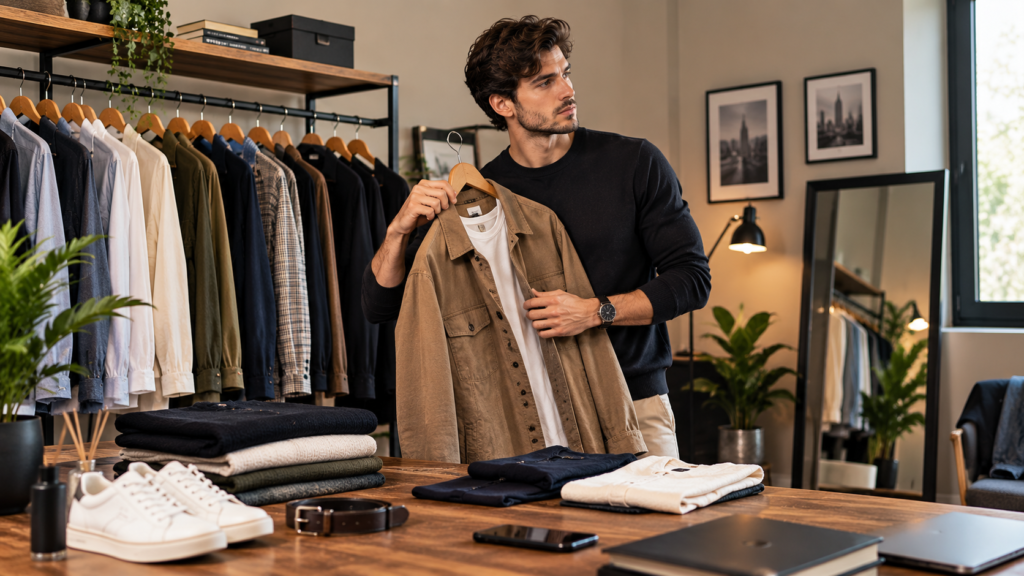
A coordinated wardrobe makes styling easier.
Neutral colors are useful because they can be combined with many other shades.
Popular wardrobe colors include:
- Black
- White
- Grey
- Navy
- Beige
- Brown
- Olive
- Cream
Once you have a strong base of neutral pieces, you can introduce brighter colors or patterns.
For example, a neutral outfit can be enhanced with a colorful shirt, sneakers, jacket, or accessory.
9. Dress According to the Occasion
Different situations require different types of mens clothing.
A casual weekend outfit may include a T-shirt, jeans, and sneakers. An office environment may require a shirt and trousers. A formal event may require a suit or blazer.
Before choosing an outfit, consider:
- Location
- Event type
- Dress code
- Weather
- Time of day
- Level of formality
Dressing appropriately does not mean losing your personal style. You can adapt your preferred aesthetic to different occasions.
10. Create a Smart-Casual Wardrobe
Smart-casual clothing is useful because it works across many situations.
A simple smart-casual wardrobe may include:
- Polo shirts
- Oxford shirts
- Chinos
- Dark jeans
- Loafers
- Clean sneakers
- Lightweight jackets
- Blazers
These pieces can be mixed and matched depending on the occasion.
For example, dark jeans with an Oxford shirt and clean sneakers can create a balanced look that is more polished than basic casualwear without being overly formal.
11. Explore Streetwear Carefully
Streetwear has become an important part of contemporary mens clothing.
Popular streetwear pieces include:
- Oversized T-shirts
- Hoodies
- Cargo trousers
- Relaxed jeans
- Sneakers
- Caps
- Utility jackets
Streetwear can be expressive, but balance is important.
If you choose an oversized top, you can combine it with relaxed or structured bottoms depending on the look you want. Neutral colors can also make statement pieces easier to style.
12. Adapt Clothing to the Season
Your wardrobe should change according to the weather.
For summer, consider lightweight and breathable fabrics. T-shirts, linen shirts, lightweight trousers, and shorts can be practical options.
For winter, layering becomes more important. Hoodies, sweaters, jackets, coats, and heavier trousers can provide warmth.
Spring and autumn can be ideal for layering with:
- Overshirts
- Lightweight jackets
- Sweatshirts
- Cardigans
- Denim jackets
Seasonal clothing should provide both comfort and practicality.
13. Pay Attention to Footwear
A wardrobe is incomplete without suitable footwear.
Different outfits may require different types of shoes:
- Sneakers
- Loafers
- Formal shoes
- Boots
- Sandals
- Running shoes
A pair of clean white or neutral sneakers can work with many casual outfits.
For formal occasions, traditional formal shoes or loafers may be more appropriate.
Choose footwear according to both appearance and comfort.
14. Use Accessories to Complete an Outfit
Accessories can add personality without requiring a completely new outfit.
Useful accessories include:
- Watches
- Belts
- Caps
- Sunglasses
- Wallets
- Bags
- Bracelets
The key is balance. Accessories should complement your outfit rather than overwhelm it.
For example, a simple watch and leather belt can add a polished touch to a smart-casual look.
15. Prioritize Versatility
When buying new pieces, think about how many different outfits you can create with them.
A versatile garment can be worn in multiple combinations.
For example, one neutral overshirt can be worn over a T-shirt with jeans, layered over a shirt with trousers, or combined with other casual pieces.
Versatility can make your wardrobe more practical and help you avoid buying clothing that gets worn only once.
Essential Mens Clothing for a Complete Wardrobe
A practical wardrobe does not need hundreds of pieces.
Everyday Essentials
Start with basic items such as:
- Plain T-shirts
- Jeans
- Casual shirts
- Chinos
- Sneakers
- Lightweight jackets
These can form the foundation of everyday outfits.
Workwear Essentials
Depending on your workplace, consider:
- Formal shirts
- Trousers
- Blazers
- Polo shirts
- Formal shoes
- Belts
Choose colors that can be combined easily.
Occasionwear
For special events, you may need:
- Blazers
- Suits
- Dress shirts
- Formal trousers
- Loafers
- Formal accessories
Choose pieces based on the type of event and expected dress code.
How to Shop for Mens Clothing Online
Online shopping gives you access to a wide variety of styles, but you should take a few precautions.
Check the Size Chart
Always compare your measurements with the brand’s size guide.
Do not rely entirely on labels such as S, M, L, or XL because sizing can vary between brands.
Read Product Reviews
Customer reviews may provide information about:
- Fit
- Fabric
- Color
- Comfort
- Quality
- Sizing
Look for repeated feedback rather than relying on one review.
Check the Return Policy
Before placing an order, understand the store’s return and exchange conditions.
This is particularly important when buying trousers, jeans, jackets, or other fitted garments.
Compare Prices
The same type of clothing can have different prices across online stores. Compare the complete cost, including shipping and available discounts.
Mens Clothing Trends
Fashion trends can provide inspiration, but you do not need to completely change your wardrobe every season.
Some contemporary trends include relaxed fits, oversized silhouettes, utility-inspired pieces, neutral colors, minimal designs, and streetwear influences.
The best approach is to combine trend-focused items with timeless basics.
For example, you can add an oversized T-shirt to an existing wardrobe without replacing all your traditional clothing.
How to Build a Budget-Friendly Wardrobe
You do not need a large budget to create a stylish wardrobe.
Start with essential pieces that can be worn regularly.
Buy Versatile Pieces
Prioritize garments that can work with multiple outfits.
Compare Prices
Look at different stores before purchasing expensive items.
Shop During Sales
Seasonal sales can provide opportunities to purchase clothing at reduced prices.
Avoid Impulse Purchases
Ask yourself whether you genuinely need a product before buying it.
Consider Cost Per Wear
A slightly more expensive item that you wear frequently may provide more value than a very cheap item that you rarely wear.
Common Mens Clothing Mistakes to Avoid
Wearing the Wrong Size
Fit can significantly affect the appearance of an outfit.
Buying Too Many Similar Pieces
If you already own several black T-shirts, buying another identical one may not add much value.
Ignoring Clothing Care
Even good-quality clothing can lose its appearance if it is washed or stored incorrectly.
Follow the care instructions on the garment.
Following Every Trend
Not every trend will suit every person or lifestyle.
Use trends as inspiration and adapt them to your personal preferences.
Choosing Style Over Comfort
Clothing should look good, but you should also be able to move and feel comfortable.
How to Care for Mens Clothing
Proper care can help clothing remain wearable for longer.
Always follow the manufacturer’s washing instructions.
Some useful habits include:
- Wash garments according to their care labels.
- Avoid unnecessarily frequent washing.
- Store clothing properly.
- Fold knitwear when appropriate.
- Hang structured garments.
- Keep shoes clean.
- Repair minor damage early.
Good care can help maintain fabric quality, color, shape, and overall appearance.
FAQs
What are the most important mens clothing essentials?
Basic T-shirts, jeans, shirts, trousers, chinos, jackets, sneakers, and suitable accessories are useful starting points for a versatile wardrobe.
How should mens clothing fit?
The fit should provide enough room for comfortable movement without looking excessively loose or tight. Pay attention to shoulders, sleeves, waist, and garment length.
What colors are best for a men’s wardrobe?
Black, white, grey, navy, beige, cream, brown, and olive are versatile colors that can be combined with many outfits.
What mens clothing is suitable for casual wear?
T-shirts, jeans, relaxed trousers, hoodies, sweatshirts, casual shirts, sneakers, and lightweight jackets are common casual options.
What should men wear for a smart-casual occasion?
A combination such as an Oxford shirt with chinos, dark jeans with a structured jacket, or a polo shirt with tailored trousers can work for many smart-casual situations.
How can I build a mens clothing collection on a budget?
Start with versatile basics, compare prices, shop during sales, avoid unnecessary purchases, and choose pieces that can be styled in multiple ways.
How do I choose the right size when shopping online?
Measure yourself and compare your measurements with the individual brand’s size chart. Check customer reviews for additional information about fit.
How often should men replace their clothes?
There is no fixed schedule. Replace clothing when it becomes damaged, uncomfortable, unsuitable, or no longer useful. Well-maintained garments can often be worn for a long time.
What is the difference between casual and formal mens clothing?
Casual clothing generally focuses on comfort and relaxed styling, while formal clothing is more structured and designed for professional or special occasions.
Is streetwear part of modern mens clothing?
Yes. Streetwear includes styles such as oversized T-shirts, hoodies, cargo trousers, sneakers, caps, and relaxed silhouettes.
How can I make basic clothing look more stylish?
Use layering, coordinated colors, suitable footwear, accessories, and different proportions. A simple outfit can look more polished when the fit and combination are well considered.
What should I check before buying mens clothing online?
Check measurements, fabric information, customer reviews, product images, shipping costs, delivery information, and return or exchange policies.
Conclusion
Building a stylish wardrobe does not require following every fashion trend or spending a large amount of money. The most effective approach is to understand your personal style, choose comfortable fits, prioritize quality, and invest in versatile pieces.
The right mens clothing can work across different occasions when you choose pieces that complement one another. Basic T-shirts, shirts, jeans, trousers, jackets, footwear, and accessories can create numerous outfits when combined thoughtfully.
When shopping online, always check size charts, product details, reviews, and return policies. When shopping in physical stores, focus on fit, comfort, fabric, construction, and overall quality.
Fashion should ultimately help you express your personality. Whether you prefer minimal outfits, classic styles, smart-casual looks, streetwear, or contemporary fashion, your wardrobe should reflect what makes you comfortable and confident.
A thoughtful wardrobe is not about owning more clothes. It is about owning the right clothes and knowing how to wear them.
CLOTHINGRAE — Wear Your Story.